.png)
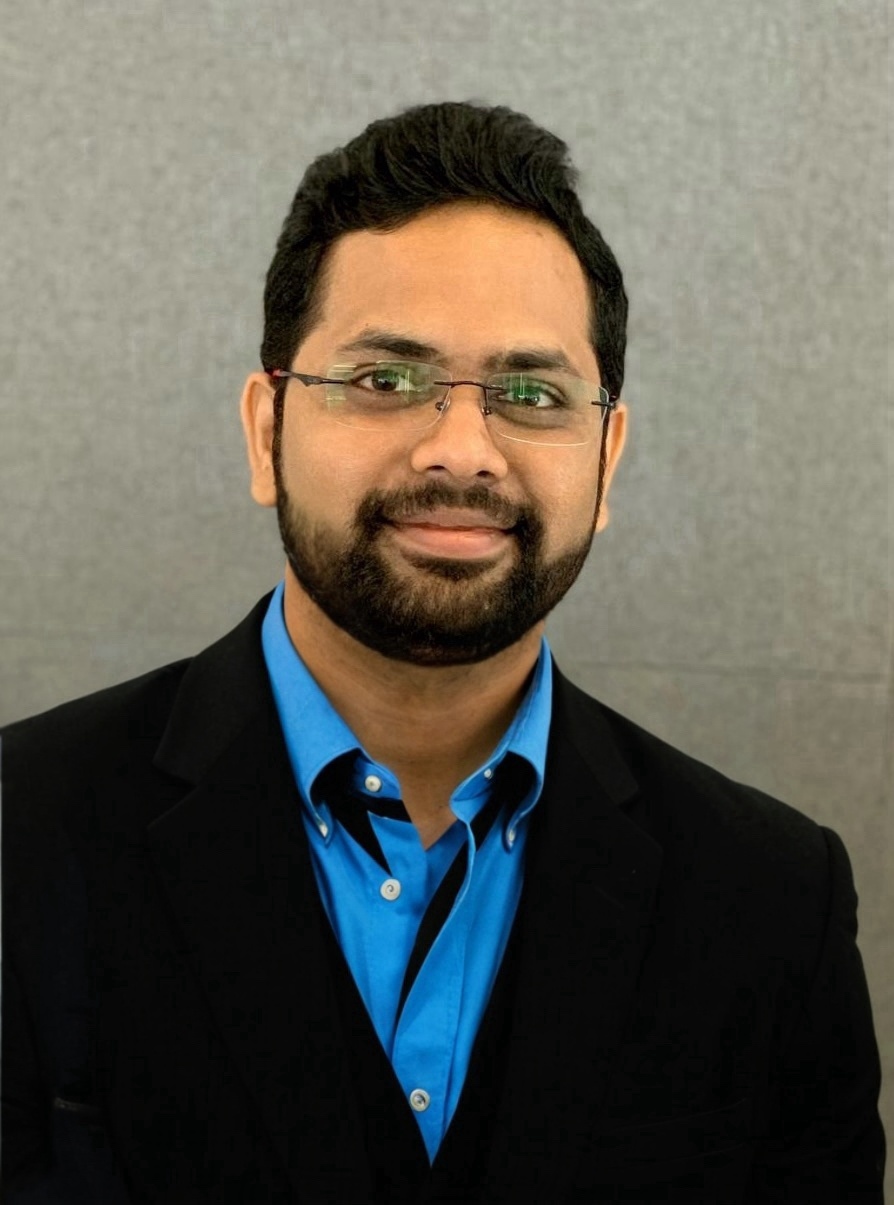
Mr. Raman Vasikarla
Talk Title:
Automation as the Cornerstone of Modern Site Reliability Engineering: Data-Driven Insights from Global Implementations.
Abstract:
In today’s cloud-driven landscape, organizations face unprecedented challenges in maintaining reliability while scaling operations. Research indicates that 81.7% of enterprises identify cloud reliability as their top operational challenge, with non-SRE organizations experiencing 12.3 hours of unplanned downtime per month, resulting in significant revenue losses. Site Reliability Engineering (SRE), pioneered at Google and widely adopted across industries, addresses these challenges through automation-driven practices.
This session explores how automation transforms modern SRE across four critical dimensions: Infrastructure as Code (IaC), Automated Monitoring and Observability, Self-Healing Systems, and Continuous Integration/Deployment (CI/CD). Evidence from enterprise implementations reveals striking outcomes: IaC reduces configuration errors by up to 70%, automated observability frameworks cut mean time to detection by 47%, and self-healing systems resolve failures in 49 seconds versus 47 minutes manually. Furthermore, CI/CD pipelines enable teams to deploy code 24× more frequently with 65% fewer incidents, while lowering per-deployment costs by 89%. Beyond technical efficiency, automation drives measurable business value. Companies adopting mature SRE practices report 42.3% fewer outages, 31.5% faster recovery times, and 37.9% lower infrastructure costs. Highly automated organizations support 41 services per engineer compared to 14 manually, launch products 2.7× faster, and save an average of $830,000 annually in infrastructure costs. Notably, automation also improves human outcomes, with engineers reporting 47% higher job satisfaction and 52% lower burnout rates.
Attendees will gain a data-backed roadmap for leveraging automation to enhance resilience, reduce costs, and empower engineering teams. The session also addresses challenges such as complexity management, cultural resistance, and maintaining appropriate trust in automation, equipping leaders with practical strategies for sustainable adoption.
Profile:
Raman Vasikarla is a seasoned Site Reliability Engineer with nearly a decade of experience in infrastructure provisioning, configuration management, and automation across multi-cloud environments, including AWS, Azure, and GCP. He specializes in building scalable, secure, and highly automated systems by leveraging tools such as Puppet, Terraform, Kubernetes, Jenkins, and Splunk.
At Splunk (a Cisco company), Raman has been instrumental in managing Splunk Cloud Infrastructure as Code, overseeing thousands of customer clusters across cloud platforms. He played a pivotal role in deploying Cloud services, designing scalable Puppet modules, and automating multi-cloud provisioning with Terraform. He also developed Golang-based internal APIs that streamlined workflows and reduced operational toil. Through these contributions, he has significantly enhanced infrastructure reliability, minimized outages, and eliminated critical points of failure.
Raman’s previous work with Optum, American Airlines, and Omnitracs further showcases his expertise in designing automation frameworks, implementing CI/CD pipelines, and leading large-scale infrastructure upgrades. He has successfully orchestrated complex deployments, automated Kubernetes environments, and enhanced cloud scalability and reliability.
With a Master of Science degree from Rivier University (GPA: 3.68), Raman combines strong technical proficiency with leadership in project planning, cross-team collaboration, and compliance enablement. Skilled in Go, Python, Bash, Ruby, and PowerShell, he is known for delivering end-to-end solutions that enhance system reliability while minimizing engineering toil. Passionate about innovation, open-source technologies, and operational efficiency, Raman continues to drive automation excellence in cloud and infrastructure engineering.